



Tooth sensitivity from whitening is common but manageable. Dentists reduce sensitivity by assessing oral health first, tailoring whitening strength, and recommending preparation and aftercare strategies. Understanding why sensitivity occurs and how to protect teeth before and after whitening helps patients achieve safer, more comfortable results with professional guidance.
Tooth sensitivity is one of the most common concerns people have before whitening their teeth. Many patients worry that whitening will make their teeth painful or uncomfortable, especially if they have experienced sensitivity in the past.
The good news is that tooth sensitivity from whitening is usually temporary and, in many cases, preventable. With the right preparation, professional assessment, and aftercare, most patients can whiten their teeth comfortably and safely. At clinics like Illumident, whitening is approached with a strong focus on protecting tooth structure and long-term oral health.
Why Teeth Whitening Can Cause Sensitivity
To understand how to reduce sensitivity, it helps to know why it happens in the first place.
Whitening products work by penetrating the enamel and breaking down stain molecules within the tooth. During this process, temporary changes can occur in the tooth structure, allowing stimuli such as cold air or liquids to reach the inner layers of the tooth more easily. This can result in short-lived sensitivity.
Sensitivity is more likely if:
- Teeth already have worn enamel
- Gums have receded, exposing root surfaces
- There are untreated dental issues such as decay or cracks
- Whitening products are used without professional assessment
This is why dentists recommend checking oral health before starting any whitening treatment.
What Dentists Check Before Whitening to Reduce Sensitivity
Before recommending whitening, a dentist will assess whether your teeth and gums are suitable. This step plays a major role in reducing the risk of discomfort.
At a professional dental check-up and clean, your dentist may check for:
- Tooth decay or
damagedfillings - Signs of gum disease or gum recession
- Enamel wear or existing sensitivity
- Areas where whitening may not be appropriate
Addressing these issues first can significantly reduce sensitivity and improve whitening results. In some cases, whitening may be postponed until underlying concerns are treated.
How to Prepare for Whitening to Minimise Sensitivity
Preparation is one of the most effective ways to reduce tooth sensitivity from whitening.
Have a Professional Clean Before Whitening
Surface stains and plaque can interfere with whitening gels. A professional clean allows the whitening product to work more evenly and reduces irritation. This is why many dentists recommend a dental clean before whitening begins.
Manage Existing Dental Problems First
If you are experiencing discomfort, it is important to identify whether it is sensitivity or pain from another cause. Ongoing pain or sharp discomfort may be linked to an underlying issue such as a cavity or toothache, which should be treated before whitening.
Follow Dentist Advice on Toothpaste and Products
Your dentist may recommend desensitising toothpaste before whitening starts. This can help calm nerve responses and strengthen enamel ahead of treatment.
In-Chair vs Take-Home Whitening and Sensitivity Control
Different whitening methods can affect sensitivity in different ways.
In Chair Whitening
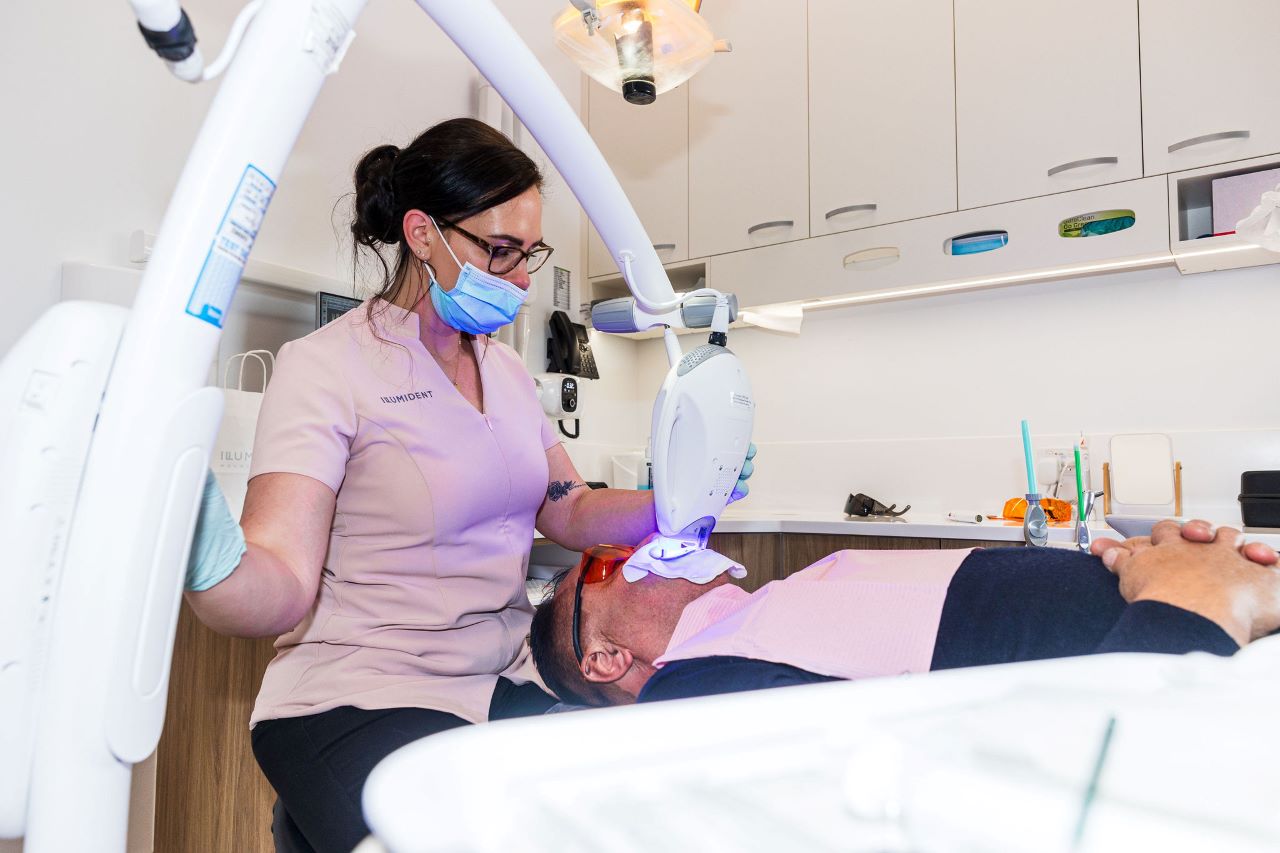
In-chair whitening is performed under direct supervision, allowing your dentist to monitor comfort levels throughout the appointment. Protective barriers are used to shield gums, and treatment can be adjusted immediately if sensitivity occurs. This level of control is one reason many patients choose professional teeth whitening rather than over-the-counter products.
Take Home Whitening
Take-home whitening uses custom-made trays that fit your teeth precisely. This allows for gradual whitening and gives patients control over application time. Because treatment is spread over multiple sessions, sensitivity can often be managed more easily by adjusting usage under dental guidance.
What to Do If Sensitivity Occurs During Whitening
Mild sensitivity during or after whitening is common and usually temporary. Dentists often recommend:
- Taking breaks between whitening sessions
- Reducing application time
- Avoiding very hot or cold foods temporarily
- Continuing use of desensitising toothpaste
If sensitivity persists or worsens, it is important to contact your dentist rather than continuing treatment independently.
Aftercare Tips to Protect Teeth After Whitening
After whitening, teeth can be slightly more responsive to temperature changes for a short period. To minimise discomfort:
- Avoid extremely hot or cold foods for 24–48 hours
- Limit staining foods and drinks such as coffee or red wine initially
- Maintain good oral hygiene with gentle brushing
- Attend regular check-ups to monitor tooth health
Maintaining healthy gums is also important, as conditions such as gum disease can contribute to ongoing sensitivity if left untreated.
When Whitening May Not Be the Right Option
In some cases, whitening may not be recommended if sensitivity risk is high or if staining is caused by factors that whitening cannot correct. Your dentist may discuss alternative options, such as dental veneers, if whitening alone is unlikely to achieve the desired result.
This personalised approach helps ensure realistic expectations and protects long-term oral health.
Professional Whitening with Comfort in Mind at Illumident
At Illumident, teeth whitening is planned with sensitivity management in mind. By assessing oral health, selecting appropriate whitening methods, and providing clear guidance before and after treatment, the goal is to help patients achieve brighter smiles with minimal discomfort.
You can learn more about professional whitening options by visiting the teeth whitening service page or explore Illumident’s broader approach to patient care on the Illumident homepage.
Disclaimer: The information provided in this blog is for general educational purposes only and should not be taken as medical advice. It is not a substitute for professional diagnosis, treatment, or care. Always seek the guidance of your dentist or other qualified healthcare professional with any questions you may have regarding your oral health or dental treatment.

.jpg)


.svg)


